Whenever tourists think about Berlin architecture, I believe they picture two things in their minds: the modern glass buildings around Potsdamer Platz and the Prussian palaces and boulevards. But there is a massive residential complex in Berlin-Schöneberg that can tell a much more complicated story. If you are interested in history and architecture as much as I am, you shouldn’t miss the Grazer Damm housing estate. This is not a normal residential complex; this is what Nazi Germany thought about urban planning.
I first visited this place when I went for a bike ride to Steglitz. I decided to look for a shortcut next to Sudkreuz, and I passed by the Grazer Damm housing estate. There I noticed something interesting about one of the buildings as I passed by. And I remember taking a picture of it so I could save the location and try to learn more about it later.
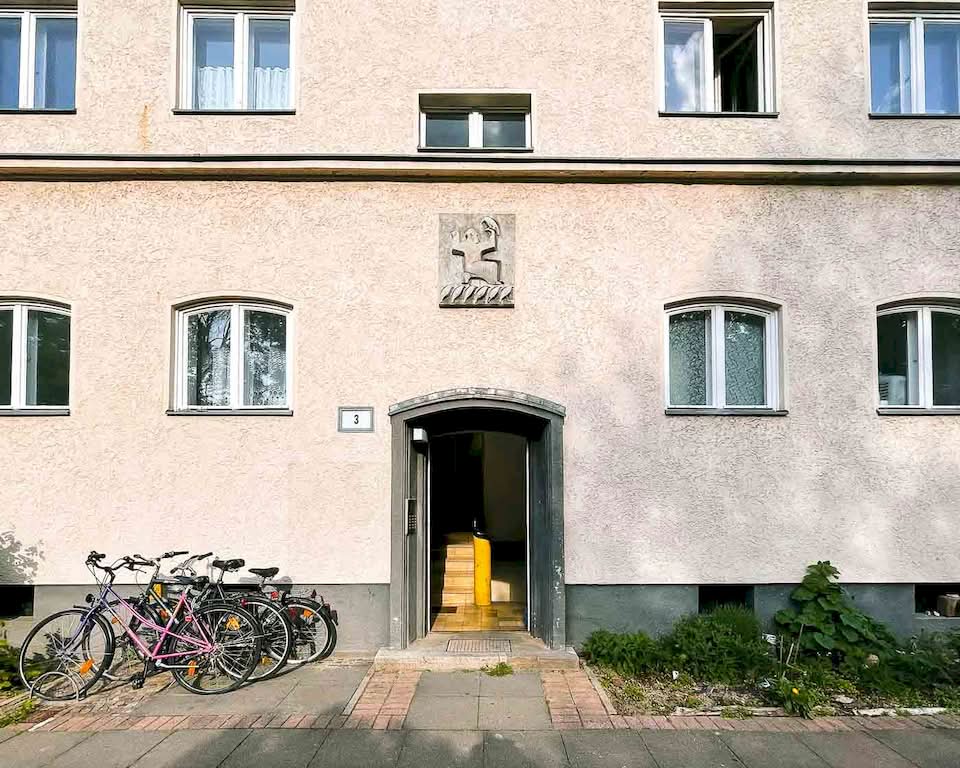
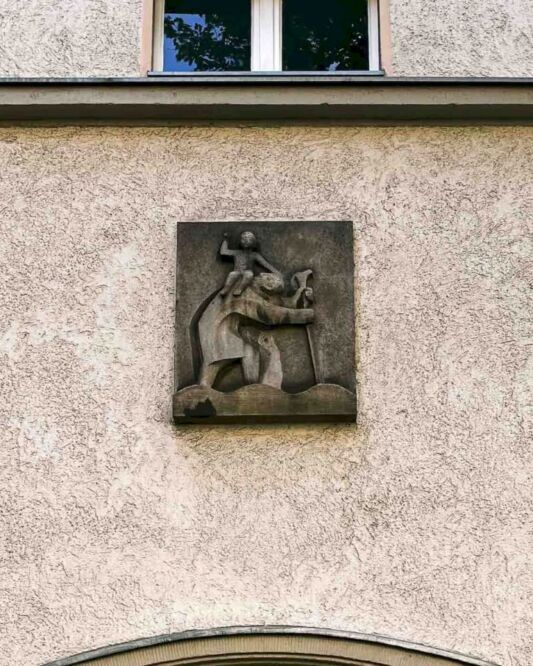
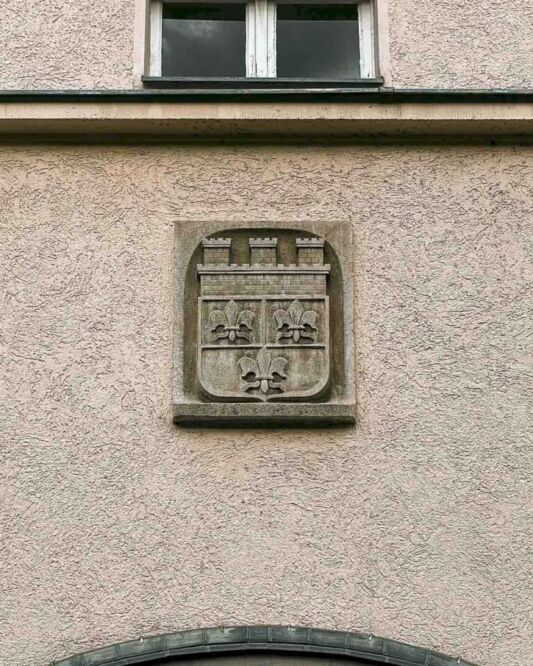
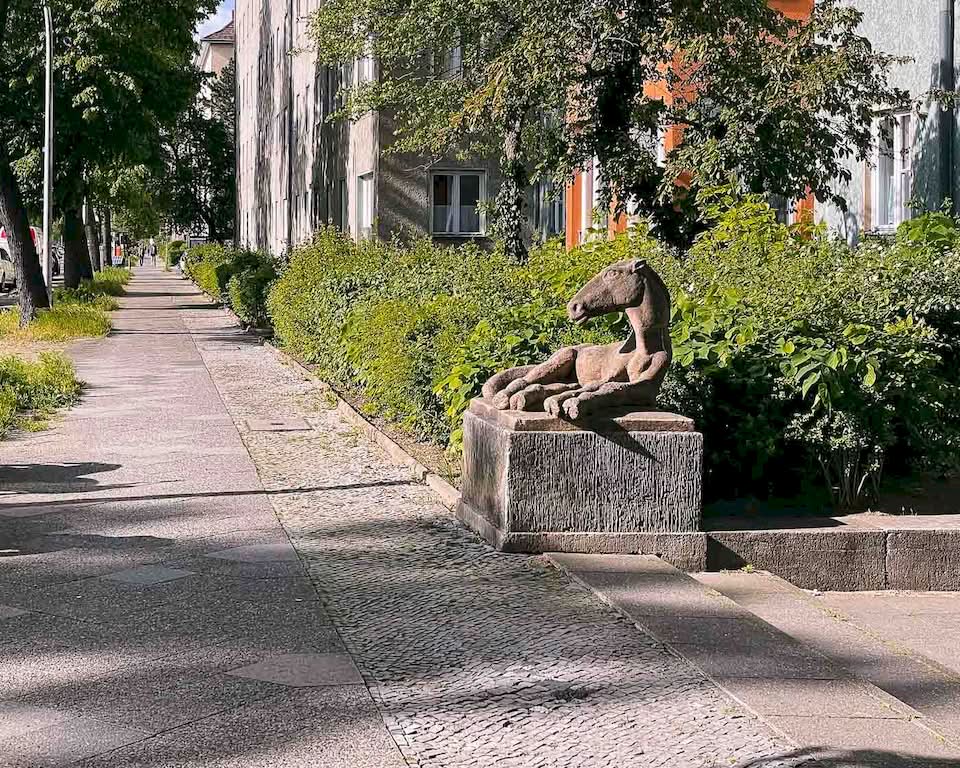
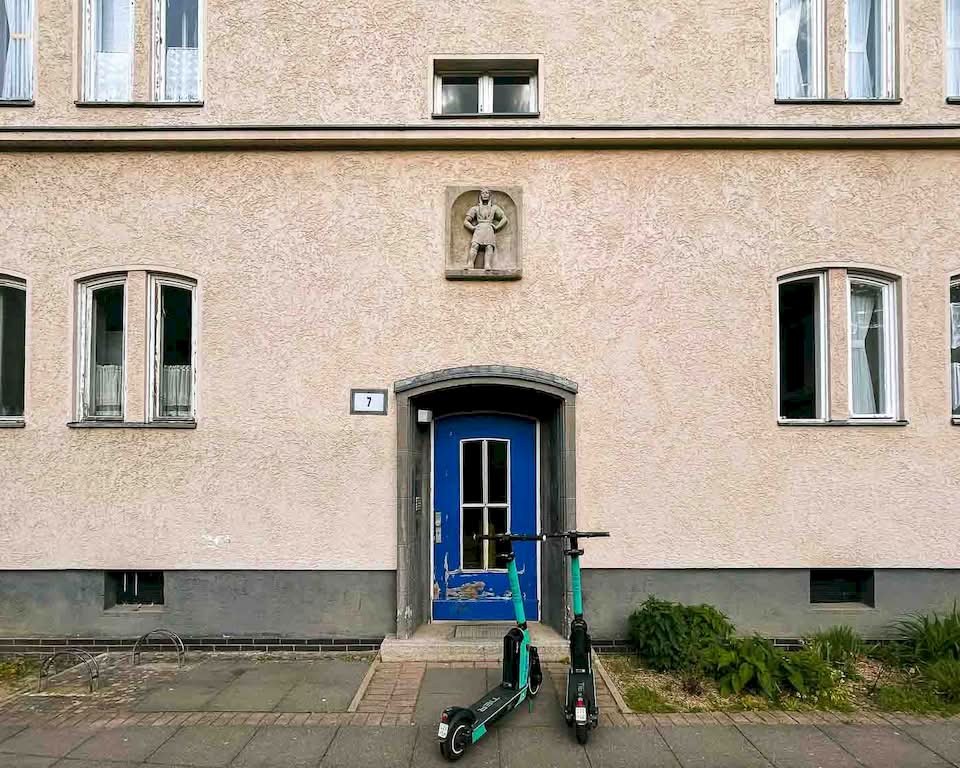
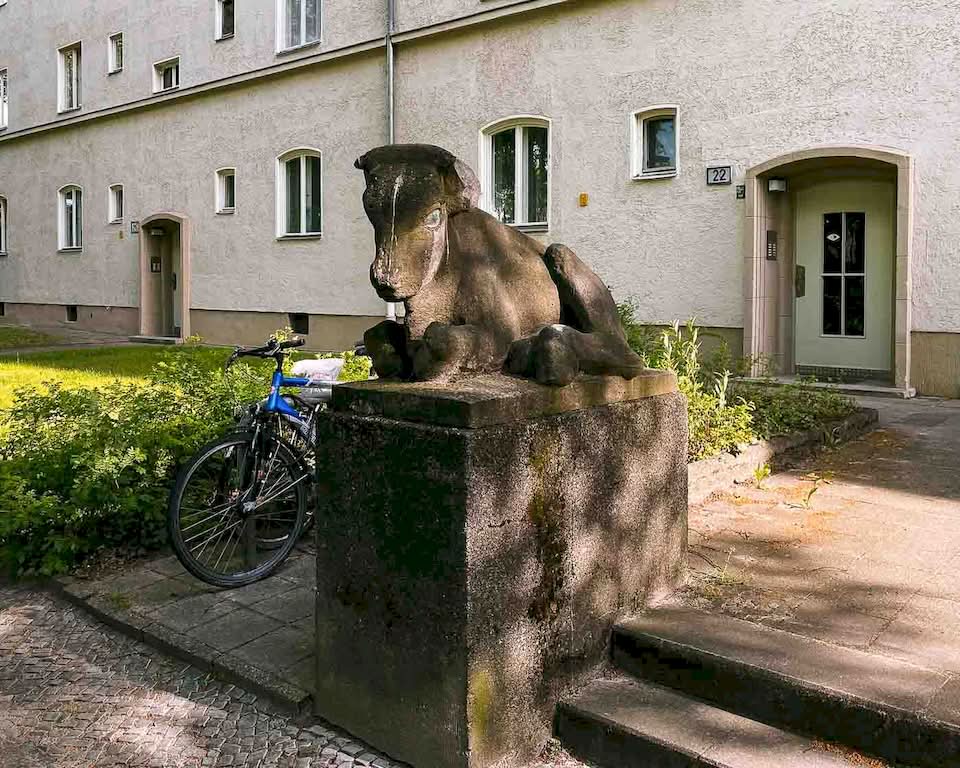
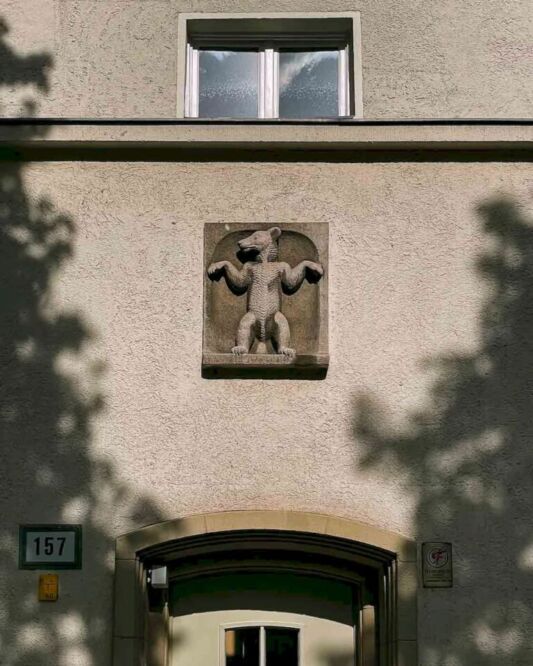
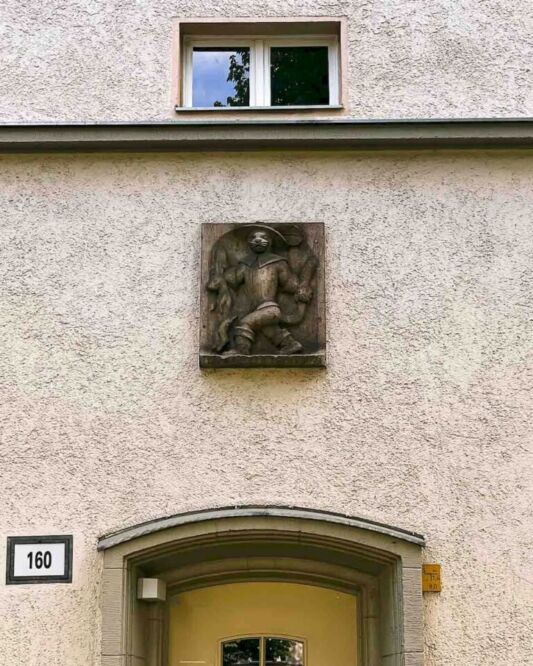
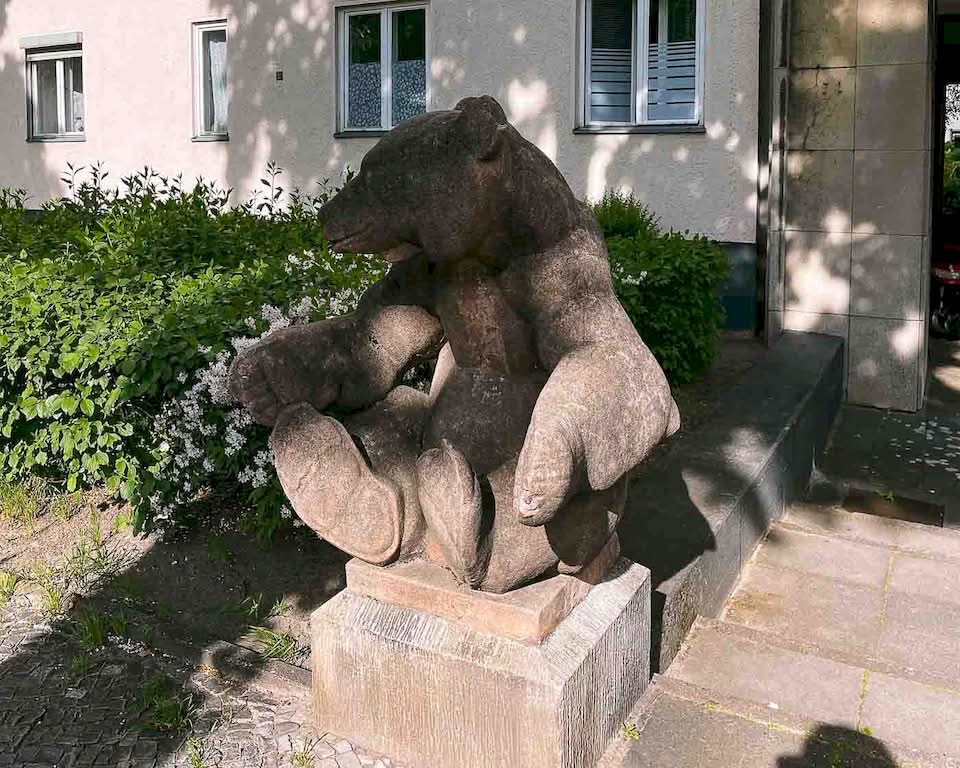
Back in the summer of 2022, I headed back there to document the small stone reliefs that appear above the entrance of the buildings. This is the main reason why you will mostly see them here and not many pictures of the buildings themselves. You will soon understand why.
Grazer Damm: Berlin’s Largest Nazi-Era Housing Project Explained
Built during the Second World War, between 1938 and 1940, the settlement at Grazer Damm is made of around two thousand homes, making it the largest completed housing estate from the Nazi era. As you walk along the 1.3-kilometer stretch of buildings, it’s easy to see how big this place is. They almost feel like a fortress.
Designed by a team of architects that included Hugo Virchow and Richard Pardon, they were led by Albert Speer since the goal here was to build something that would survive in a future war. The plan was to make a part of the future Welthauptstadt Germania into an air-raid-proof city, and this idea guided how the buildings were set up.
When you walk around the area, you will notice that the blocks have open areas on certain sides, and it seems like that wasn’t in place to help the residents with a view. This was done to allow the air pressure from bomb blasts to escape and prevent what caused courtyards to turn into firestorms during aerial attacks.
Hidden Symbols and Modern Struggles
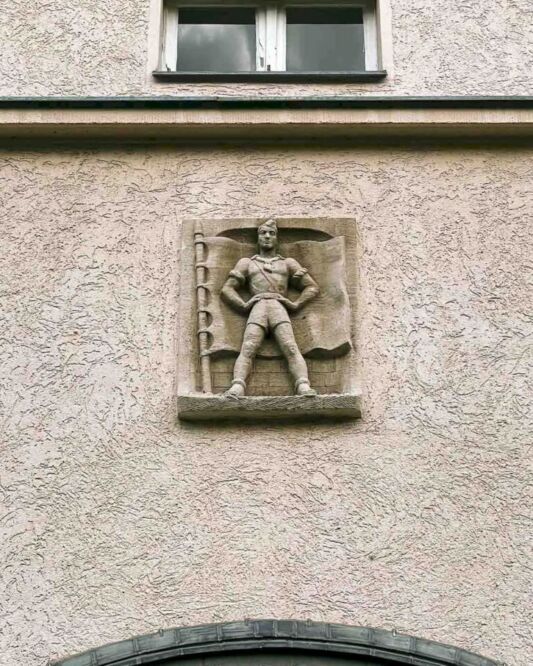
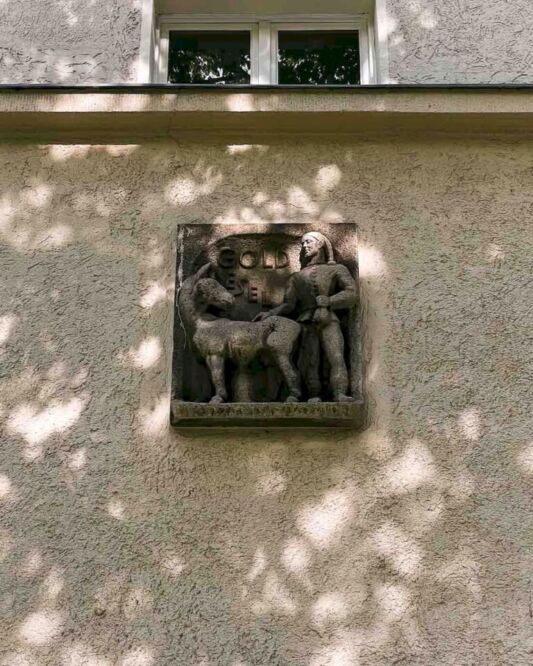
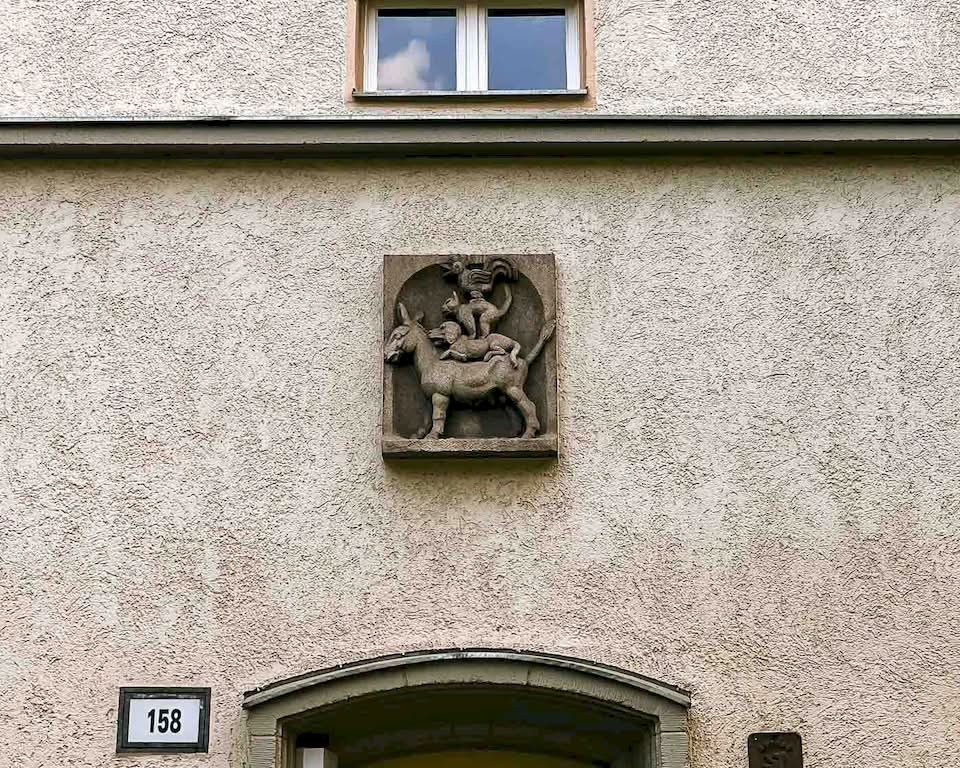
But, as I said before, I wasn’t there to explore the Nazi-era architectural aesthetic of the buildings on Grazer Damm. I was there to capture the stone reliefs that are visible above the entrance doors of the buildings. Some of them show fairy tales like the animals from the Town Musicians of Bremen. These reliefs were put in place to help residents find their way.
However, some of them still serve as a reminder of Nazism’s ideological hold on daily life. There are still ceramics that show images of the Hitler Youth and the League of German Girls, the girls’ branch of the Nazi Party youth movement known in German as Bund Deutscher Mädel. Which is insane for me to see it on a building in the middle of Berlin.
Grazer Damm was a drastic shift in Living Standards
For those interested in social history, Grazer Damm is a fascinating location in addition to the historical artifacts from the Nazi era. I say this because these represent a big departure from the progressive New Objectivity that was led by the Bauhaus in the 1920s.
While the Weimar Republic gained international praise for trying to bring the lower levels of society to a higher standard, the Nazi era thought that these ideas were cultural Bolshevism. Instead of improving housing, they implemented what was called Volkswohnung, and it meant that apartments were designed to be the cheapest rentals possible. This meant that they didn’t have hot water or central heating, they rarely had balconies, and they followed a strict cost limit per unit.
And, surprisingly, even with all these horrible standards, they still stand today. But the Grazer Damm buildings have been facing a new kind of transformation in the last decades. It all started in 2004 when a state-owned property management company was sold to a private investment fund. This was the first step towards gentrification.
Later, extensive modernizations included the very balconies and heating systems that were denied to the original tenants. Now, they are driving up rents and causing tension for the long-term residents who have called these historic blocks home for decades.
How to Visit the Grazer Damm housing estate
The estate begins near the Schöneberg motorway junction (Bundesautobahn 100) and runs south toward the Insulaner hill. The area is pretty residential, so there won’t be much for you to explore around besides the Natur Park Südgelände. But if you want to go for a walk after exploring the area, the “abandoned” Schlangenbader Strasse tunnel and the Bierpinsel aren’t that far.
The Dark Side of Berlin Design: Exploring the Grazer Damm Estate
Grazer Damm – Schöneberg
12157 Berlin
