Skip to content
FTRC.BLOG / Europe / Germany / Hamburg / The Landmarks of Historic Hamburg

Discovering the Landmarks of Historic Hamburg

Before I ever visited Hamburg, I had a vision of the city in my head. It was a modern German metropolis by the water, crowned by the Elbphilharmonie and the energy of one of Europe’s largest ports. When I went to the city for the first time, I got a better sense of it.

After a few visits, I began to see a city molded by centuries of maritime aspirations, post-war resiliency, and artistic passion. When you start exploring historic Hamburg, you will peel back the layers of a city that has survived Great Fires and wartime destruction. Every time it came out, its heritage was preserved in beautiful red brick, and its identity was strengthened.

After a few visits, I began to see a city molded by centuries of maritime aspirations, post-war resiliency, and artistic passion. When you start exploring historic Hamburg, you will peel back the layers of a city that has survived Great Fires and wartime destruction. Every time it came out, its heritage was preserved in beautiful red brick, and its identity was strengthened.

You will see it in the small roads around Deichstraße to the massive warehouses of the Speicherstadt. Hamburg is a one-of-a-kind place that combines what I would call Hanseatic tradition with new ideas in architecture. Maybe this happens because they are one of the richest cities in Germany; perhaps it’s something else.

You could be going to the city for the arts, the history, or just because you’re interested in travel. The landmarks I’m highlighting here tell the story of a “Free and Hanseatic City” that has always looked toward the future.

Get away from the bars and shopping districts and explore the areas that have shaped Hamburg’s skyline for many years if you want to understand the city. Here I will share some of my favorite landmarks of historic Hamburg.

Hamburger Kunsthalle: A Romantic Encounter

The first item on this list is from the art lovers. The Hamburger Kunsthalle is a museum that houses a vast collection of paintings, sculptures, and much more, spanning over seven centuries.

The first item on this list is from the art lovers. The Hamburger Kunsthalle is a museum that houses a vast collection of paintings, sculptures, and much more, spanning over seven centuries.

And its most famous artwork is Caspar David Friedrich’s “Wanderer above the Sea of Fog.” And we loved seeing it so much that there is an entire article on it here. This painting is a symbol of what came to be known as German Romanticism and captures a sense of wonder that reflects the atmosphere around the 19th century in Germany.

But there is more to the Hamburger Kunsthalle than the artwork. The building itself is a masterpiece made of three different architectural styles. The Galerie der Gegenwart, a modern section, and a limestone extension follow the original brick. All of them present a timeline of the city’s cultural evolution.

The first item on this list is from the art lovers. The Hamburger Kunsthalle is a museum that houses a vast collection of paintings, sculptures, and much more, spanning over seven centuries.
Once it was one of the tallest buildings in the world, but today it stands as a memorial. This is St. Nicholas’ Church. Unlike some urban structures that were rebuilt after the Second World War, this church remains in ruins. The blackened spire that rises to the sky is a reminder of the damage that Operation Gomorrah did in 1943.

A Silhouette of Resilience in the Shape of the St. Nicholas’ Church

Once it was one of the tallest buildings in the world, but today it stands as a memorial. This is St. Nicholas’ Church. Unlike some urban structures that were rebuilt after the Second World War, this church remains in ruins.

The blackened spire that rises to the sky is a reminder of the damage that Operation Gomorrah did in 1943.

Even though it’s still in ruins, visitors can explore the area without any problem. There is even a glass elevator that takes you to a viewing platform high above Hamburg. The panoramic view of the city and the somber memorial make this place one of our favorite historic landmarks in Hamburg.

Once it was one of the tallest buildings in the world, but today it stands as a memorial. This is St. Nicholas’ Church. Unlike some urban structures that were rebuilt after the Second World War, this church remains in ruins. The blackened spire that rises to the sky is a reminder of the damage that Operation Gomorrah did in 1943.

An Engineering Marvel Called the Old Elbe Tunnel

Opened to the public in 1911, the St. Pauli Elbe Tunnel bridges the gap between the industrial needs of Hamburg and architectural beauty. This tunnel is more than 400 meters in width and was designed to allow dockworkers to go from the southern banks of the Elbe River directly to the shipyards.
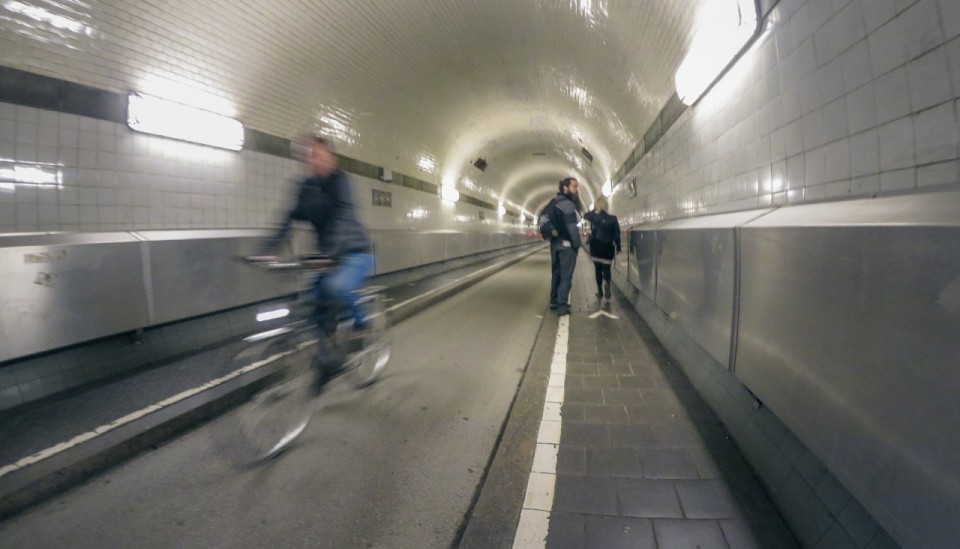
Opened to the public in 1911, the St. Pauli Elbe Tunnel bridges the gap between the industrial needs of Hamburg and architectural beauty. This tunnel is more than 400 meters in width and was designed to allow dockworkers to go from the southern banks of the Elbe River directly to the shipyards.

When you descend into the tunnel via the original lifts, you will feel like you are stepping into a different time. Down there, the walls are decorated with ornate tiles that show fish and river life, turning a piece of functional infrastructure into a work of art. Something that we don’t see much of anymore.

No trip through the historic Hamburg can be complete without a walk around the Speicherstadt, the largest warehouse district in the entire world. Everything in the area was built on top of thousands of oak piles. These huge brick buildings were once the main way that coffee, tea, and spices got to Germany.

The Speicherstadt and Beyond

No trip through the historic Hamburg can be complete without a walk around the Speicherstadt, the largest warehouse district in the entire world. Everything in the area was built on top of thousands of oak piles. These huge brick buildings were once the main way that coffee, tea, and spices got to Germany.

No trip through the historic Hamburg can be complete without a walk around the Speicherstadt, the largest warehouse district in the entire world. Everything in the area was built on top of thousands of oak piles. These huge brick buildings were once the main way that coffee, tea, and spices got to Germany.

Today, the Speicherstadt district is a UNESCO World Heritage Site, and you can easily understand why whenever you walk around the area. The lights reflecting on the red brick will create an atmosphere that seems out of place as you watch the sun set through the iron bridges. Like a hard-to-explain thing from the days of maritime trade.

After a few visits, I began to see a city molded by centuries of maritime aspirations, post-war resiliency, and artistic passion. When you start exploring historic Hamburg, you will peel back the layers of a city that has survived Great Fires and wartime destruction. Every time it came out, its heritage was preserved in beautiful red brick, and its identity was strengthened.

Timeless Treasures: Must-Visit Sites in Historic Hamburg

There are plenty of things to do and places to see in Hamburg, and we also wrote about some unusual things to see in town. You should check it out.

Leave a Reply

Your email address will not be published. Required fields are marked *

This site uses Akismet to reduce spam. Learn how your comment data is processed.

Felipe Tofani

Felipe Tofani

Felipe Tofani is a passionate designer who loves creating experiences and has a mix of music tastes. As the guy behind this blog, he enjoys finding fascinating places to explore. Whether he’s unearthing up hidden gems or sharing interesting historical stories, Felipe is the creative force behind the content here. Join him on this journey of design, discovery, and some pretty awesome tunes.View Author posts